
Private equity player Everstone Capital has sold Modern Foods, which it had taken over in early 2016 from Hindustan Unilever, to Mexican baking major Grupo Bimbo for an undisclosed sum.

You can add it to your kid's lunchbox or have with your chai.

'He was one of his kind.' 'He walked at the speed of a run.' 'He wore full-sleeve shirts no matter what or when.' 'He always drove himself.'

The anticipated adverse impact on the economy and consequent uncertainty around employment prospects is likely to result in lower purchasing power.

Ministers' resignation accepted, portfolios farmed out
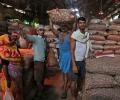
Wholesale inflation rate eased to 34-month low of (-) 0.92 per cent in April on easing prices of food, fuel and manufactured items. The wholesale price index (WPI) based inflation has been on a declining trend for 11 months in a row and entered the negative zone in April. In June 2020 WPI was at (-) 1.81 per cent.

FSSAI will put the draft guidelines in front of a seven-member expert committee.

'Being someone who wholely believes in God and frequently visits temples across the country, it is the last thing I would intentionally do. To those whose feelings we've touched, I extend my sincere & heartfelt apologies.'


As Ayodhya readies itself for the glittering, much-awaited consecration ceremony of the Ram Mandir on January 22, and as millions of pilgrims and devotees pour into the holy city for the momentous event, companies are rushing to do their bit and be a part of the mega celebrations. Some are offering a part of their profits as donations, telcos are beefing up the number of cellular towers to ensure better connectivity, and there are those distributing jalebis and food platters.

Indians spend a higher percentage of their earnings on food consumption, compared with other countries globally, Ramachandra N Galla, chairman of Amara Raja Group, said.

The land transfer or subleasing would allow the Patanjali Group to set up the food processing facility and entitle it to other incentives under the central policy guidelines.

'This is the victory of the people of Gujarat who want real development, not the hype of development.'

Over 65 Union ministers are likely to take oath, going by the visual of the meeting Modi held with his likely council of ministers.

From the Sensex pack, Infosys, Hindustan Unilever, Reliance Industries, ICICI Bank, Larsen & Toubro, Asian Paints, Nestle, Axis Bank, Wipro and Kotak Mahindra Bank were the major gainers. JSW Steel, State Bank of India, Tata Steel, Bajaj Finserv, UltraTech Cement, IndusInd Bank, Tata Motors and Bajaj Finance were the major laggards.

Inflation in food articles during June stood at 2.04 per cent, as against 1.13 per cent in May.

The IIP data showed a significant slowdown in the manufacturing sector, which grew at 4.2 per cent in July 2019 as compared to 7 per cent a year ago.
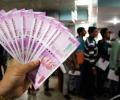
Future Gaming and Hotel Services whose director is the lottery magnate Santiago Martin is the top purchaser of electoral bonds having purchased bonds worth Rs 1,368, according to data uploaded by the Election Commission of India on its website on Thursday.

A 14-member council of ministers was sworn in Patna by Governor Phagu Chauhan on Monday and the BJP bagged seven berths.

Among the Sensex firms, IndusInd Bank, Maruti, Titan, Reliance Industries, NTPC, Mahindra & Mahindra, Larsen & Toubro, Kotak Mahindra Bank and HDFC Bank were the major laggards. UltraTech Cement, JSW Steel, Axis Bank, Tata Consultancy Services, Wipro and ITC were the major gainers.

If the Budget makes no big announcements on new schemes, projects, or tax giveaways, the government would face a major political dilemma as it may have to reluctantly consider shunning the practice of unveiling pre-election sops to woo voters, notes A K Bhattacharya.

A young couple sharing a laugh - in the living room over a Polish joke book, on the beach, in the rain - with the tagline, "Made for each other", hung from billboards at prominent street corners from the 1960s to the 1990s. It was a campaign for one of the largest selling cigarette brands in India, Wills (Navy Cut) from the ITC stable, that resonated with a generation of smokers and non-smokers alike till the curtains came down on tobacco advertising in 2004. As we prepare to welcome 2024, ITC has metamorphosed from a tobacco giant into a conglomerate straddling multiple large-sized businesses. In the mind space of Gen Z or millennials, the company represents a gamut of branded products - from frozen food (ITC Master Chef), noodles (YiPPee!), and cookies (Sunfeast) to snacks (Bingo!) and notebooks (Classmate), and so on and so forth.

However, the UP government said it has given one more month to Patanjali to meet the conditions required to get the final approval.

'When it was confirmed that I would do the song, Manishaji walked up to me and asked, "Please Vijayshree, tell me how are you planning to do the song. Give me a rough idea so that I am mentally prepared".'

Did you know that a food security officer in a leading company can earn upto $84,000 a year by just protecting data?

The California walnuts shipped from the US to India have seen a sharp uptick with imports more than doubling from September to November against the same period last year. This comes after New Delhi removed its retaliatory customs tariffs on the key dry fruit. Two days ahead of US President Joe Biden's visit to New Delhi to attend the G20 Summit on September 9-10, India dropped additional customs duties on about half a dozen US goods that were imposed in 2019 in response to America raising tariffs on certain steel and aluminum products coming from India.

Traction for its specialty portfolio, a strong showing in the domestic market, and better regulatory compliance are positives for the country's largest pharmaceutical (pharma) company, Sun Pharmaceutical Industries. Given the triggers, some brokerages have increased their earnings per share estimates and target price for 2024-25 (FY25). This should sustain the momentum for the stock, which has been one of the major pharma gainers in 2023-24 (FY24), rising 57 per cent. It is currently trading at Rs 1,547 per share.

The government is expected to shortly classify the entire food products industry into three clearly defined categories, for licensing as well as taxation purposes.

IT major HCL Technologies' Shiv Nadar has retained his position as the 'most generous Indian' in 2023 as well, with a 76 per cent jump in his donations at Rs 2,042 crore. Wipro's Azim Premji's donations zoomed by 267 per cent to Rs 1,774 crore during the same year, according to the Edelgive Hurun India Philanthropy List 2023 released on Thursday. Richest Indian Mukesh Ambani donated Rs 376 crore in the year, which is an 8 per cent decline.
Vir Sanghvi spills some secrets
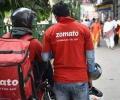
After a sharp rally in the equities market this year, investors could be better off rotating some funds towards the debt market. Experts believe several tailwinds could spur bond market returns over the next 12-18 months. These include India's robust macroeconomics, declining inflation, and the imminent passive flows of close to Rs 2.5 trillion on account of domestic sovereign bonds getting included in the JP Morgan global indices.
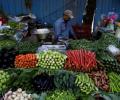
The wholesale price-based inflation declined to 4.95 per cent in December 2022, mainly due to fall in prices of food articles and crude petroleum. The Wholesale Price Index (WPI)-based inflation was 5.85 per cent in November 2022 and 14.27 per cent in December 2021. Inflation in food articles was (-)1.25 per cent, while in fuel and power it was 18.09 per cent during December 2022.

Indian economy is gathering momentum in the second quarter, though inflation would continue to average above the central bank's comfort zone of 6 per cent, said an article in the RBI's monthly bulletin released on Thursday. The consumer price index (CPI) based retail inflation shot up significantly to 7.44 per cent in July, from 4.87 per cent in the preceding month, mainly due to soaring prices of tomato, vegetables and other food items. In his address to the nation on the Independence Day, Prime Minister Narendra Modi vowed to take more steps to contain price rise.

The World Meteorological Organisation (WMO) has officially confirmed that 2023 is the hottest year on record by a huge margin, smashing global temperature records.

"The decision came after the cabin crew reported disruptive conduct on board, specifically a dispute between a husband and wife," sources told ANI.

Formulation of food recall procedures in case of unsafe or hazardous products, mandatory compliance with GAP (good agricultural practices) for big retailers, labelling changes for packaged food items, organic food certification, setting water quality standards and verification of claims by food supplement companies are among the major reforms being planned by the sector regulator and the government.

The industry body also asked for extending cost subsidies to all cold chain projects ranging from 25-50 per cent of the total cost.

In a competitive market, pricing is the management's business. The consumer has so many choices -- single screens, multiplexes, TV, online streaming or DVDs. Nothing forces him to go to a multiplex. Nor are films an essential commodity where prices have to be regulated, says Vanita Kohli Khandekar.

Use a readymade croissant to create an easy breakfast with baked pear and walnuts.

How can you improve the flavour of a sweet as divine as sandesh?
 © 2026 Rediff.com - Advertise with us - Disclaimer - Privacy Policy - Sitemap - Feedback - About us - Terms of use - Grievances